
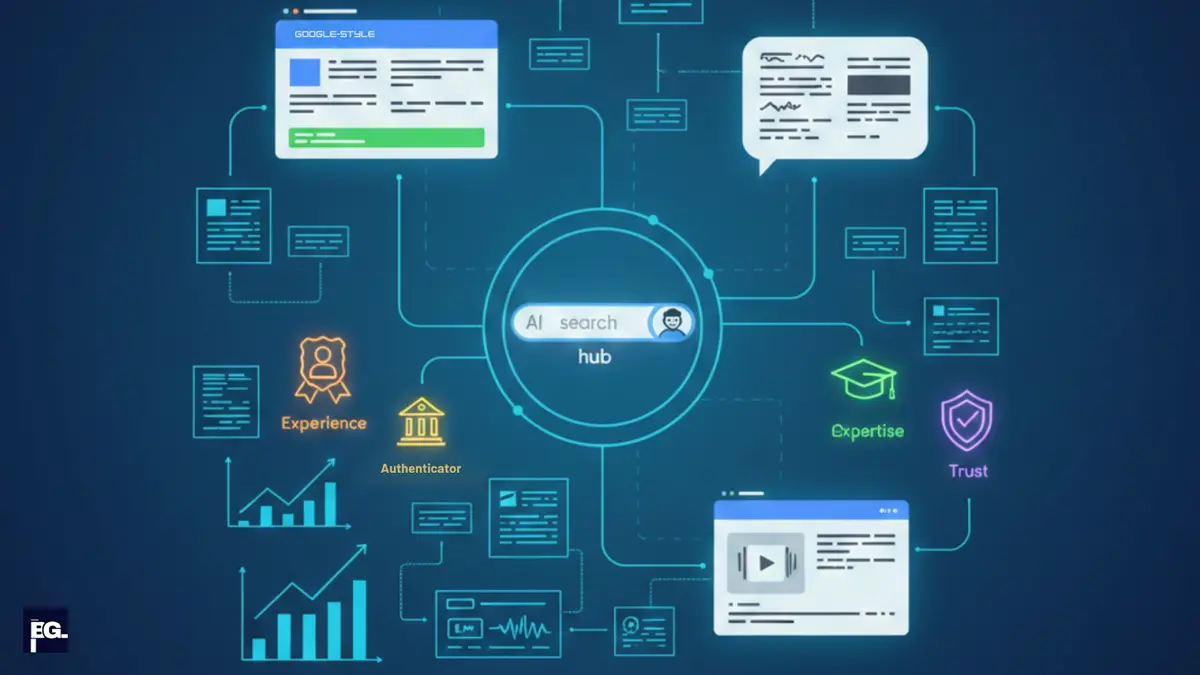
SEO Trends in 2026: What Works and What Doesn’t
Search engine optimization has undergone its most dramatic transformation since the rise of mobile-first indexing. The 2026 SEO landscape is dominated by AI, user experience, and trustworthiness signals, but it’s also littered with outdated tactics that will actively harm your rankings. This comprehensive guide breaks down exactly what’s working in 2026 and what you should abandon immediately.
Why SEO Trends Changed Fundamentally in 2026
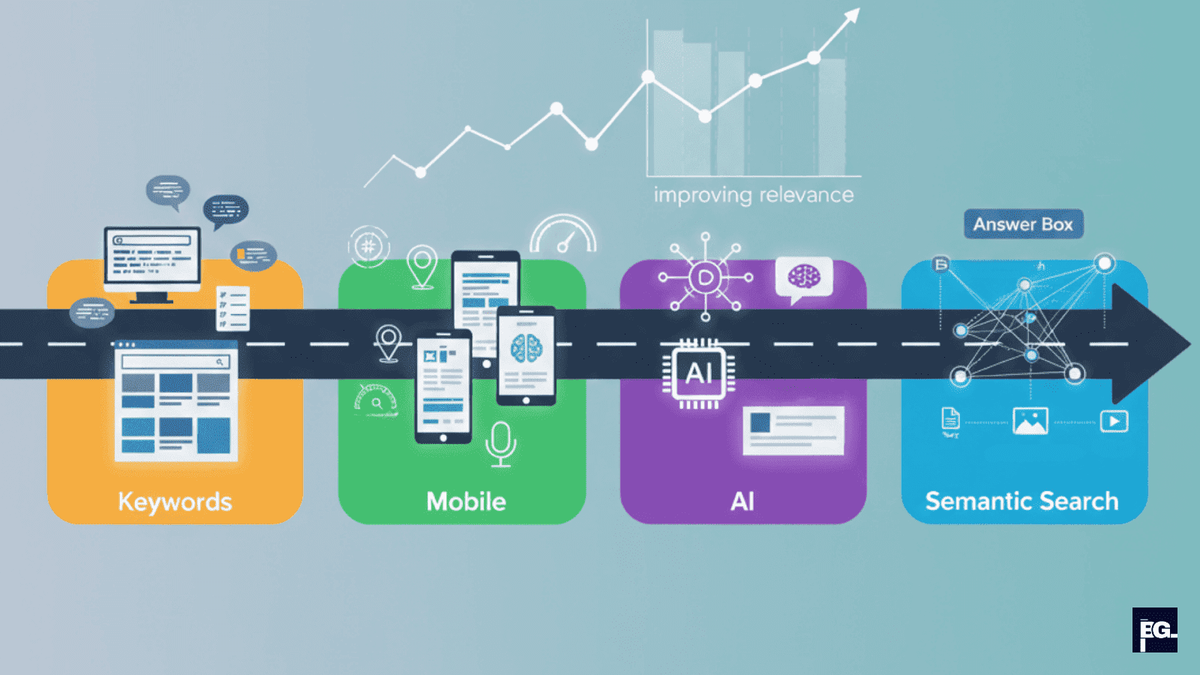
For years, SEO practitioners operated under a simple equation: find keywords with search volume, optimize pages for those keywords, build backlinks, and traffic follows. That era has definitively ended.
The rise of AI search engines (ChatGPT, Perplexity, Google AI Overviews, Claude), the integration of generative answers directly into search results, and Google’s December 2025 core update have fundamentally reweighted how search engines evaluate content. Traffic metrics no longer tell the complete story. Rankings matter less than visibility across multiple platforms. Keywords matter less than topics and user intent.
For businesses navigating this shift, understanding not just the new SEO best practices but also which old tactics now actively hurt your rankings is essential for remaining competitive.
1. E-E-A-T Has Become the #1 Ranking Factor (Not Keywords)
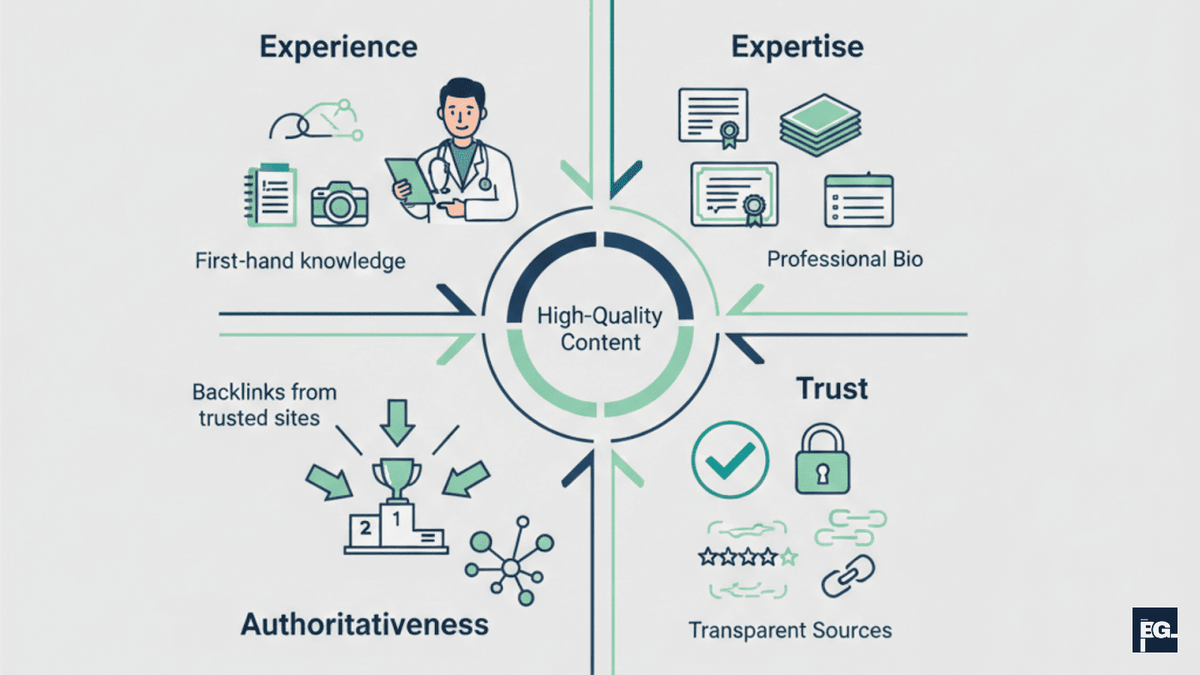
The true weight of this framework in 2026 cannot be overstated. E-E-A-T, Experience, Expertise, Authority, and Trustworthiness, has evolved from a guideline for quality raters into Google’s primary ranking signal.
What This Means in Practice
Google’s algorithm now scrutinizes whether your content demonstrates genuine knowledge, not just keyword optimization. A page ranked #1 in 2025 could plummet in 2026 if Google determines it lacks authentic expertise or relies too heavily on aggregated information.
The four pillars in 2026:
Experience: Does the author have firsthand, hands-on knowledge of the topic? A financial advisor writing about retirement planning carries more weight than a content mill writer. Google increasingly verifies author credentials and looks for evidence of real-world implementation. This is why bylines, author profiles with credentials, and demonstrable industry participation matter more than ever.
Expertise: Can you prove specialized knowledge that goes beyond surface-level understanding? For YMYL (Your Money Your Life) content, financial advice, medical information, legal guidance, Google now requires formal qualifications or extensive proven experience. For technical topics, demonstrated mastery of complex concepts signals expertise more effectively than breadth.
Authority: Do recognized leaders and institutions cite your work? This extends beyond traditional backlinks. AI systems evaluate whether your brand appears as a source in Wikipedia, industry publications, research citations. Authority in 2026 is increasingly measured by your presence in third-party contexts where decision-makers research solutions.
Trustworthiness: Is your site secure, transparent, and factually accurate? Trust signals include verified business information (consistent name, address, phone numbers across platforms), HTTPS implementation, clear authorship attribution, transparent privacy policies, and measurable fact-checking. Websites with even minor factual errors see trust scores drop significantly.
How to Implement E-E-A-T in 2026
Create detailed author profiles that include:
- Relevant certifications and credentials.
- Years of experience in the field.
- Previous publications and speaking engagements.
- Links to professional profiles (LinkedIn, institutional pages).
- Examples of past work demonstrating expertise.
For each major piece of content, include:
- Author byline with credentials prominently displayed.
- Publication date and last updated timestamp.
- Primary sources and citations (not just internal links).
- Fact-checked claims with external references.
- Editor or reviewer information for verification.
Actively pursue mentions in authoritative third-party sources. Pitch expert commentary to industry publications. Contribute to Wikipedia in your area of expertise. Build relationships with journalists and researchers who cite sources in your field.
2. Semantic SEO and AI Vectors: Moving Beyond Keyword Matching
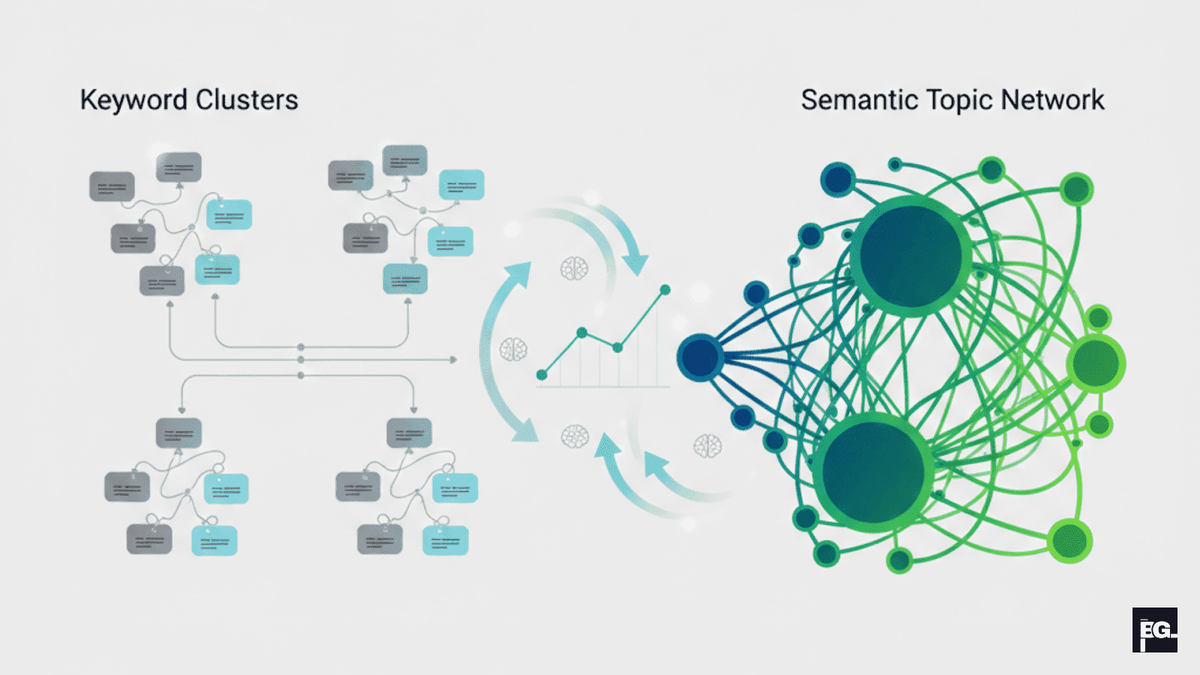
The shift from keyword-based to semantic-based SEO represents perhaps the most fundamental change in how search engines interpret content. While traditional SEO asks “Does this page contain the keyword?”, semantic SEO asks “Does this content comprehensively address the topic and its contextual relationships?”
Understanding AI Vectors
AI systems now represent content as multidimensional vectors, numerical representations of meaning, context, and relationships. Instead of matching individual keywords, these systems understand how concepts relate to each other, which synonyms and related terms are relevant, and how your content fits within the broader landscape of a topic.
This means:
- Keyword density becomes irrelevant.
- Keyword variations and synonyms become essential.
- Topical comprehensiveness matters more than keyword placement.
- Related concepts and contextual information significantly boost rankings.
Implementing Semantic SEO
Conduct semantic keyword clustering: Instead of targeting “best CRM software,” “top CRM tools,” and “CRM solutions” as separate keywords, group them as semantic variations of the same topic. Create one comprehensive piece addressing all variations, then develop supporting content that addresses specific use cases within that semantic cluster.
Use synonyms and related term mapping: Tools like Google’s NLP API and modern SEO platforms identify which terms are semantically related. Include these naturally throughout your content, in headers, body text, image alt text, and meta descriptions. For example, an article about “project management software” should naturally incorporate related terms like “task management,” “team collaboration,” “workflow automation,” and “project tracking” without forced optimization.
Build topic models: Instead of writing about individual keywords, think in terms of topic hubs. If your main topic is “remote work tools,” create a pillar page covering the broad topic, then develop supporting pages addressing specific aspects: “time tracking for remote teams,” “communication platforms for distributed workforces,” “project management for remote projects.”
Leverage structured data for semantic clarity: Semantic SEO relies on search engines understanding entity relationships. Use Schema.org markup to explicitly define entities, their relationships, and their properties. This tells search engines exactly how different concepts relate, making your content more discoverable within AI systems.
3. Content Experience (CX) Metrics: Beyond Traditional Engagement
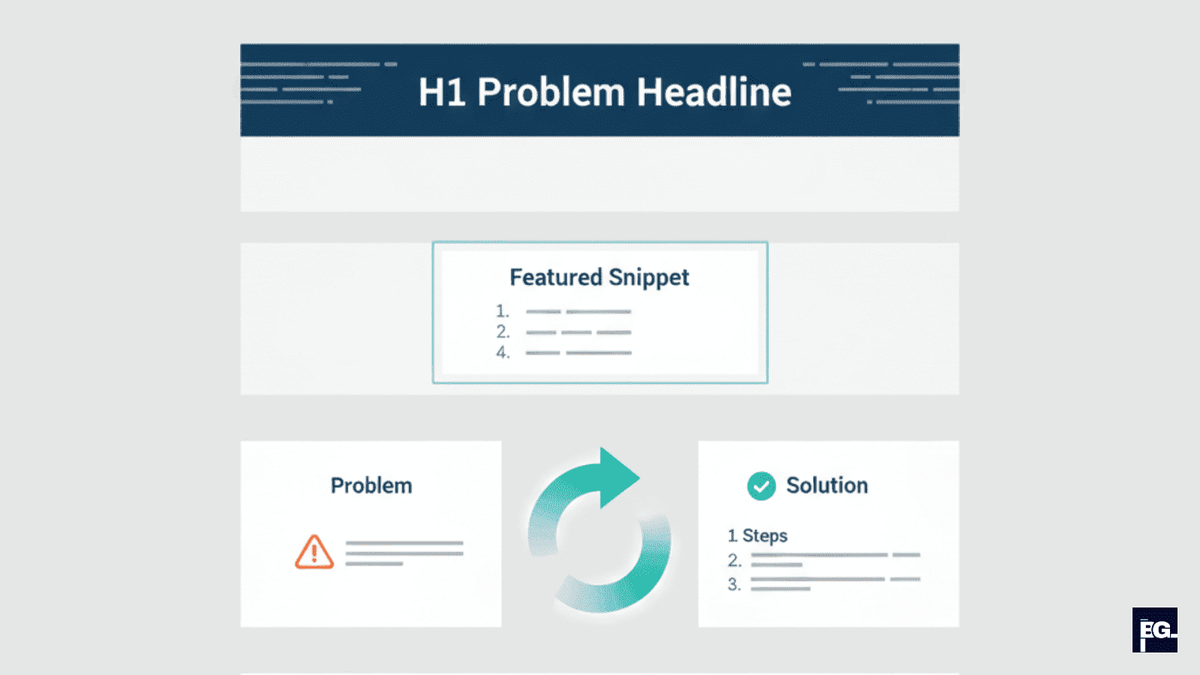
Google’s December 2025 core update introduced Content Experience (CX) as a distinct ranking factor, separate from traditional user engagement metrics. CX measures whether a page fully satisfies user intent on first visit, whether the content structure enables easy comprehension, and whether users feel their problem was genuinely solved.
CX vs. Traditional Engagement
A high-traffic page with good time-on-page might still rank poorly under CX evaluation if users bounce after finding the answer they needed. Conversely, a page with brief engagement might rank excellently if it completely solves the user’s problem efficiently.
Google measures CX through:
- Intent satisfaction depth: Did users need to search again for the same query? Returning searchers signal the first result didn’t fully address intent.
- Content structure clarity: Are headers and sections logically organized? Can users quickly scan and find relevant information?
- Depth vs. length: Does content provide comprehensive information without unnecessary filler?
- Problem resolution: Did the page provide actionable next steps or only information?
Implementing CX Best Practices
Structure content for multiple user needs simultaneously:
- Provide quick answers for time-pressed users (first 2-3 paragraphs).
- Include detailed explanations for in-depth learners (middle sections).
- Offer actionable implementation guides for decision-makers (final sections).
Use progressive disclosure, present information in layers rather than overwhelming users upfront. Start with key insights, then provide supporting detail.
Include multiple content formats within single pages: text explanations, step-by-step lists, comparison tables, video demonstrations, and infographics. Different users consume information differently; providing multiple formats dramatically improves CX.
Test pages post-publication to ensure they satisfy actual user intent. Track whether searchers return to Google for the same query, which indicates incomplete satisfaction.
4. Structured Data and Schema Optimization: Now Essential, Not Optional
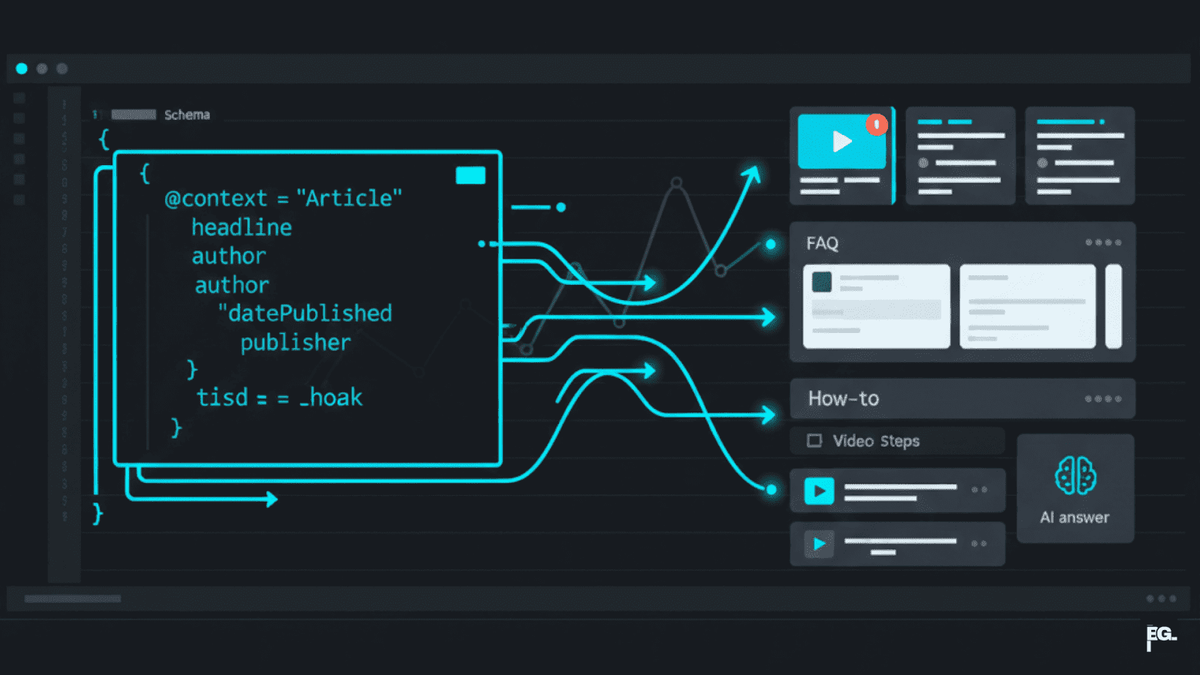
Structured data has evolved from a “nice-to-have” enhancement to an essential SEO foundation. In 2026, Google increasingly relies on structured data to identify content for AI Overviews, voice search results, and rich snippets. Websites implementing proper schema see 25-40% higher click-through rates and significantly better AI visibility.
Why Structured Data Matters in 2026
AI systems rely on structured data to accurately understand content. Research shows that AI systems with properly structured knowledge graphs achieve 300% higher accuracy than those working with unstructured content. When Google’s AI systems encounter structured data on your pages, they can more reliably extract information for AI-generated answers.
Core Schema Types to Implement
JSON-LD for Articles: Mark up blog posts with Article schema, including headline, author (with credentials), publication date, and modified date. This signals freshness and expertise to both search engines and AI systems.
Product Schema: For e-commerce, include product information, pricing, availability, ratings, and reviews in JavaScript Object Notation for Linked Data (JSON-LD) format. This improves visibility in AI shopping queries and increases CTR through rich snippets.
FAQPage Schema: Mark up frequently asked questions with FAQPage schema. This significantly increases the likelihood your answers appear in featured snippets and AI Overviews.
LocalBusiness Schema: For local businesses, comprehensive LocalBusiness markup (address, phone, hours, reviews, service areas) improves both local search visibility and AI personalization for location-based queries.
Organization Schema: Define your organization, its associated people, service areas, and contact information. This reinforces E-E-A-T signals and helps search engines understand your topical authority.
Person/Author Schema: For knowledge worker businesses, Person schema for team members, their expertise, and their content contributions strengthens overall E-E-A-T signals.
Implementation Strategy
Use JSON-LD exclusively, it’s the recommended format by Google and all major search engines. Implement schema using WordPress plugins or custom code. Test all schema using Google’s Rich Results Test. Ensure all properties are filled, not just required fields, comprehensive schema improves AI understanding. Keep schema updated whenever content is modified; stale dates undermine freshness signals.
5. Topical Authority and Topic Clusters: Replacing “Keyword Density”
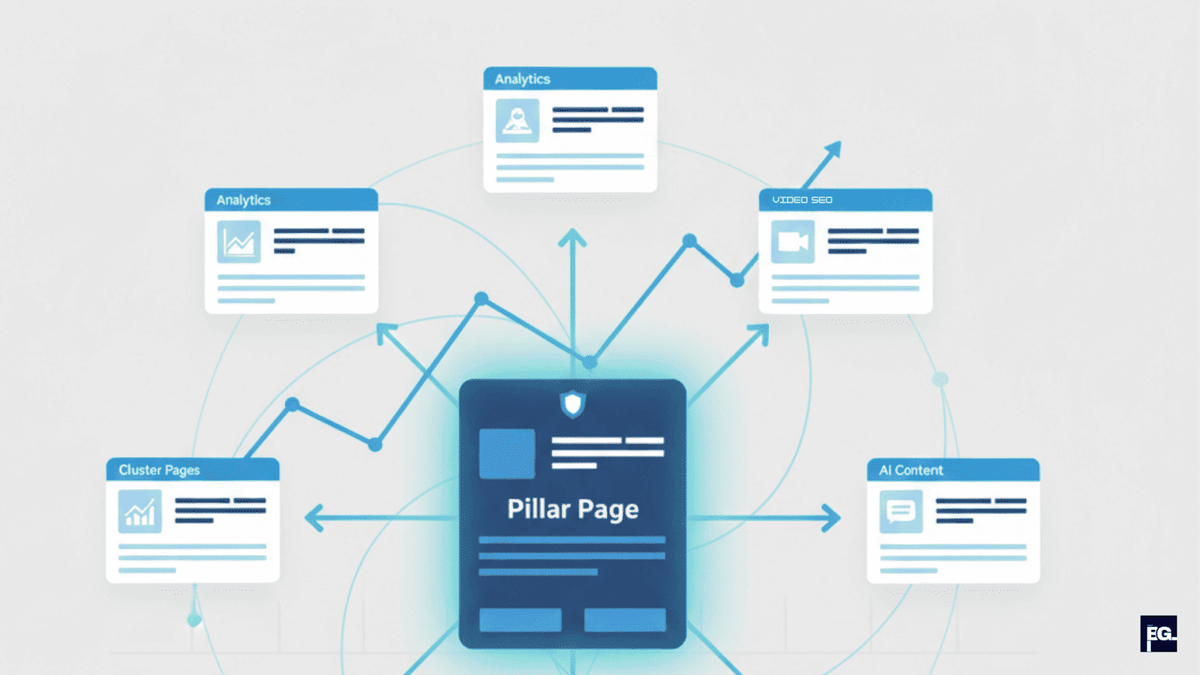
One of the most effective 2026 SEO strategies is establishing topical authority through strategic content clustering,a concept that Backlinko mentions but doesn’t detail deeply. Topical authority means your website becomes the comprehensive, interconnected source for information about a specific topic.
How Topic Clusters Work
A typical topic cluster consists of:
- Pillar page: A comprehensive 3,000-5,000 word overview of a broad topic (e.g., “complete guide to project management”).
- Cluster pages: 1,500-2,500 word pages addressing specific subtopics (e.g., “project management for nonprofits,” “best practices for distributed teams”).
- Internal linking architecture: Strategic links connecting pillar to cluster pages, and cluster pages to related content.
This structure signals to Google that your site has deep, interconnected knowledge about a topic. Search algorithms reward this comprehensiveness with higher rankings for all related queries.
Building Topic Clusters: Practical Steps
Step 1 – Identify Your Pillar Topics: Choose broad topics aligned with your business and audience needs. For a SaaS HR platform, pillar topics might include “talent acquisition,” “employee onboarding,” “performance management,” and “compensation strategy.”
Step 2 – Map Related Subtopics: For each pillar, identify 15-25 related subtopics that potential customers actually search for. “Talent acquisition” might include “how to write effective job descriptions,” “recruiting for remote positions,” “screening interview best practices,” and “reducing time-to-hire.”
Step 3 – Conduct Competitive Cluster Analysis: Analyze competitor clusters. Which topics are they covering? Which gaps exist in their coverage? Are there emerging subtopics they’re ignoring?
Step 4 – Create Pillar Page: Write a comprehensive pillar page that touches on all subtopics at a high level.
Step 5 – Develop Cluster Pages: Create detailed pages for each subtopic. Each cluster page should thoroughly address its specific topic from multiple angles.
Step 6 – Build Strategic Internal Links: Link from all cluster pages to the pillar page. Link between related cluster pages using contextual anchor text. This architecture helps Google understand topic relationships.
Step 7 – Expand Gradually: Develop one cluster fully before moving to the next. A deeply developed single cluster outperforms multiple shallow clusters.
A documented case study shows how this approach generated 17x traffic growth for an HR SaaS company within 12 months.
6. What’s NOT Working Anymore: Outdated Tactics Actively Harming Rankings
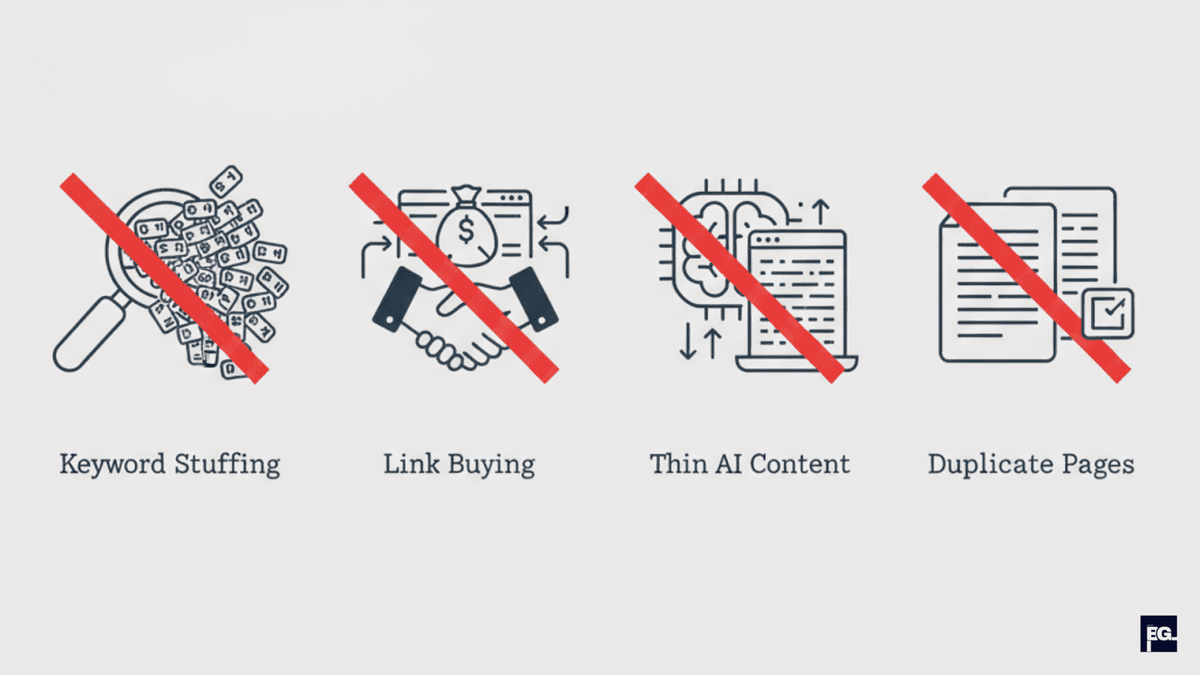
Understanding what doesn’t work is equally important as knowing what does. Several SEO tactics that were effective as recently as 2024 now actively harm your rankings in 2026.
Keyword Stuffing (Still)
Google’s Helpful Content Updates continue to punish pages where keywords appear unnaturally or repetitively. Modern keyword optimization means using keywords naturally within comprehensive content, not forcing exact-match repetitions.
Instead: Write for humans, addressing topics comprehensively. Use keywords naturally as the topic requires them. Include semantic variations and related terms, but always prioritize readability.
Thin AI-Generated Content Without Human Review
The proliferation of AI content generation tools led many marketers to believe AI-generated content could compete with human-written content at scale. 2026 data shows this is false. Google’s SpamBrain algorithm specifically identifies low-value AI content and has updated multiple times to penalize unreviewed AI output.
Instead: Use AI for research, outlining, and initial drafting,but always conduct thorough human review and fact-checking. Add original insights, data, and firsthand expertise that AI cannot generate.
Exact-Match Anchor Text and Over-Optimization
Link building focused on exact-match anchor text (e.g., repeatedly linking “best CRM software” to your homepage) now raises spam flags. Google evaluates anchor text diversity, context, and relevance rather than exact matches.
Instead: Use branded anchor text, partial matches, and natural contextual links. Vary anchor text while maintaining relevance. Prioritize links from topically relevant sources over anchor text precision.
Multiple Pages for Every Keyword Variation
Creating separate pages for “best invoicing software,” “top invoicing tools,” and “invoicing solutions” (keyword cannibalization) now confuses Google rather than improves rankings. Search engines understand semantic similarity and interpret this as a content quality issue.
Instead: Create one comprehensive page addressing all semantic variations of a keyword. Develop supporting pages for entirely different subtopics, not keyword variations.
Buying Links and Using Link Schemes
Link purchasing, especially from irrelevant sources or link directories, has become increasingly dangerous. Google’s Link Spam Updates target these schemes with greater sophistication each year.
Instead: Create genuinely valuable content that naturally attracts links. Pursue links from topically relevant, authoritative sources. Build relationships with journalists and industry publications.
Ignoring Mobile Optimization and Core Web Vitals
Mobile-first indexing has been in place since 2020, yet many sites still deprioritize mobile experience. In 2026, Core Web Vitals remain a ranking factor, and poor mobile performance directly impacts both user experience and AI crawlability.
Instead: Ensure responsive design across all breakpoints. Optimize images for different screen sizes. Reduce JavaScript and third-party script bloat. Test mobile performance using PageSpeed Insights regularly.
Relying Solely on SEO Scores (Yoast, Semrush, Moz)
Following SEO plugin scores mechanically often leads to forced keyword insertion, unnatural content structures, and poor user experience. These scores are guidance, not gospel.
Instead: Use SEO tools for research and initial optimization, but prioritize user experience and readability over tool scores. Manually review each piece for quality, accuracy, and genuine value.
7. Brand Visibility in AI Search: Your New North Star Metric
One of the most important 2026 trends is the shift from traffic metrics to visibility metrics. With AI Overviews appearing in 15% of searches and zero-click results increasingly common, your traditional ranking position and click-through rate no longer capture SEO success.
Key AI Visibility Metrics to Track
Citation share: How often is your brand mentioned as a source in AI-generated answers, compared to competitors? If 5 competitors are mentioned but you never are, that’s a critical problem.
Share of voice (SOV) across AI platforms: Track mentions across ChatGPT, Perplexity, Google AI Overviews, Bing Copilot, and Claude. A brand appearing in 60% of AI answers about your topic has significant advantage over one appearing in 10%.
Sentiment of mentions: Are you mentioned positively, neutrally, or negatively in AI answers? Neutral mentions have value but positive citations matter more. Track whether AI systems associate you with specific topics and whether that association is favorable.
Topical relevance: Are you consistently mentioned in AI answers about your core topics? Or do you appear randomly across unrelated queries? Consistent thematic relevance strengthens authority signals.
Citation conversion: Beyond visibility, track whether AI visibility correlates with downstream business metrics (signups, demo requests, revenue). This proves the business value of AI visibility.
How to Optimize for AI Visibility
Create citation-worthy content: AI systems look for authoritative sources that provide comprehensive, well-sourced answers. Original research, data-backed insights, and expert commentary get cited more frequently than aggregated information.
Ensure your site is crawlable by AI systems: Many AI companies use different crawlers than Google. Verify your robots.txt isn’t blocking AI crawlers. Check that your site’s structure allows comprehensive indexing.
Use structured data liberally: Schema markup helps AI systems understand and extract information from your pages more accurately, increasing the likelihood of being cited.
Build third-party presence: Don’t rely entirely on owned media. Contribute expert commentary to industry publications, research partners, and media outlets. AI systems pull citations from these sources.
8. Video-First Strategy: YouTube’s Growing Role in AI Search
A trend overlooked by most SEO analysis is YouTube’s integration into AI-powered search results. YouTube citations appear in approximately 30% of AI Overviews, a proportion that’s increasing monthly.
Why Video Matters in AI Search
Video provides AI systems with rich context. Transcripts, titles, descriptions, and metadata help AI understand video content. YouTube’s ownership by Google gives its videos algorithmic advantage. Users increasingly prefer video answers to text-only explanations.
Implementing a Video SEO Strategy
Create video content addressing your topic clusters’ core questions. Optimize video titles, descriptions, and tags for semantic search,not just keyword matching. Include full transcripts with your videos. Transcripts help AI understand content and provide keyword context without forcing optimization.
Build a YouTube channel as a topical authority hub. Develop playlists around topic clusters. Cross-link between blog content and video content. Embed videos on your pillar pages with proper markup.
9. Zero-Click Optimization: Winning Without the Click
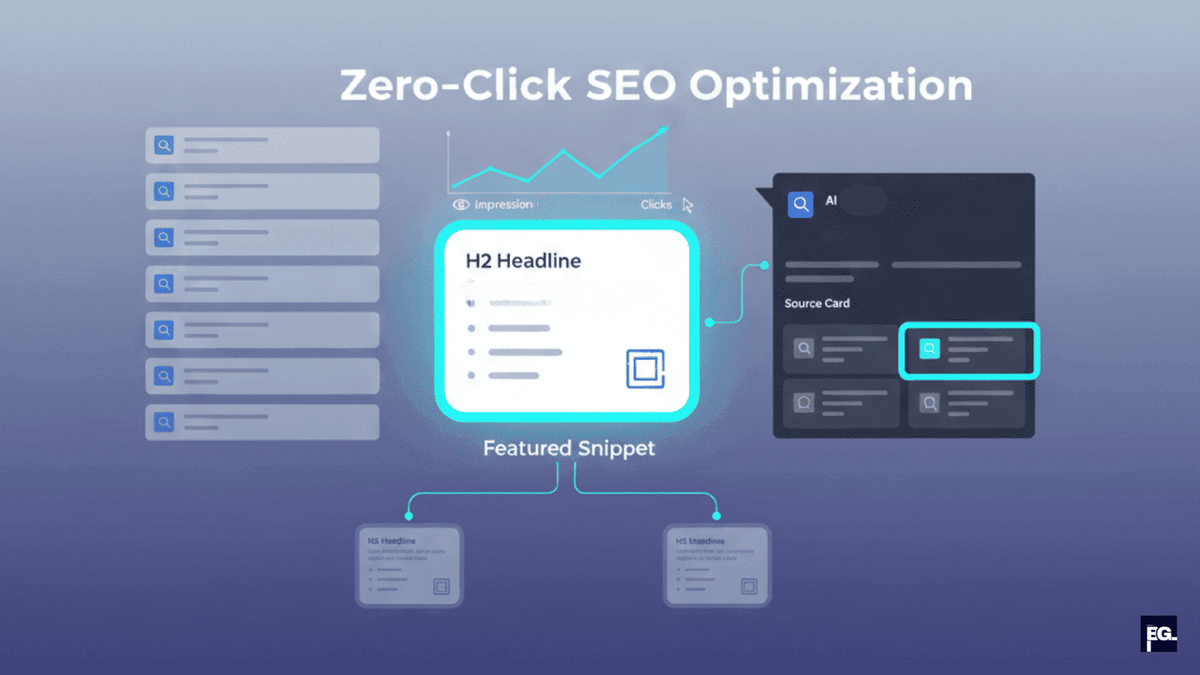
While others mention zero-click searches, most SEOs still view them as traffic losses. The 2026 perspective is different: zero-click results represent branding and authority opportunities, not merely lost traffic.
Reframing Zero-Click Searches
When your content appears in featured snippets, People Also Ask boxes, Knowledge Panels, or AI Overviews without generating clicks, you’re still winning, just through different metrics. Your brand gains visibility, credibility is established, and you influence purchase decisions before users ever visit your site.
Zero-Click Optimization Tactics
Structure content for snippet extraction: Use clear question-answer formats. Include data tables, comparisons, and definitions that AI can easily extract and display.
Target People Also Ask sections: Identify questions Google frequently displays for your keywords. Create dedicated sections addressing these questions with clear, concise answers.
Build a Knowledge Panel presence: Verify your business information across Google My Business, Wikipedia (if applicable), and authoritative databases. A complete, accurate Knowledge Panel appearance builds trust and brand awareness.
Optimize for AI Overviews: Study what content appears in AI Overviews for your core queries. Analyze the structure, sources, and information types being extracted. Create content matching these patterns.
10. Intent-Driven Strategy Evolving into Persona-Driven Strategy
The shift from search intent to persona-driven strategy represents a fundamental change in content planning methodology.
Why Personas Matter More Than Intent
Search intent classification (informational, commercial, transactional, navigational) assumes users with similar queries have similar needs. In reality, two users searching “project management software” might have radically different contexts:
- A solo freelancer with a $50/month budget.
- An enterprise team with thousands of users and complex integration needs.
- A nonprofit with limited technical resources.
- A government agency with security requirements.
Each persona requires different messaging, examples, pricing information, and implementation guidance. Intent classification misses these nuances.
Implementing Persona-Driven SEO Strategy
Develop 3-5 detailed buyer personas with:
- Demographics and job titles.
- Primary pain points and goals.
- Decision-making process.
- Where they research solutions (Google, ChatGPT, Reddit, YouTube, LinkedIn).
- Questions they ask at each decision stage.
Map your content to personas:
- Create pillar and cluster content addressing each persona’s specific scenarios.
- Develop product comparison content tailored to different company sizes.
- Build use-case-specific implementation guides.
- Create persona-specific landing pages and messaging.
Build content for each research channel: Different personas research differently. Your “manager at SaaS company” persona might research heavily on LinkedIn while your “freelancer” persona uses Google. Develop content for each channel.
Measure success differently: Instead of “Did this keyword drive traffic?” ask “Did this content move person X forward in their decision journey?” Track whether specific personas convert at higher rates from specific content.
Conclusion: The New SEO Imperative
SEO in 2026 requires simultaneous focus on multiple dimensions: AI visibility across platforms, E-E-A-T authenticity, topic cluster authority, persona-driven strategy, content experience quality, and zero-click optimization. Success requires moving beyond keyword rankings and traffic metrics into a more holistic understanding of how your content serves audiences across search engines, AI platforms, and social discovery channels.
The fundamentals of great content remain unchanged,but the systems for distributing, measuring, and optimizing that content have transformed completely. Marketers who adapt to this multidimensional SEO landscape will thrive in 2026. Those clinging to 2020 era tactics will struggle to compete.
The future of SEO isn’t about ranking first on Google,it’s about being visible, credible, and cited across all the places your audience researches and discovers solutions. The brands that master this shift will dominate search in 2026 and beyond.
If you want your SEO strategy to work across Google, AI platforms, and social discovery in 2026, BrainGig can help you build content that is visible, credible, and designed to convert. From GEO-ready blog optimization to topic clusters, EEAT-focused content, and multi-channel search strategy, we help brands stay ahead of the 2026 SEO shift.
FAQs
1. How to build topical authority?
Create pillar pages and 15-25 cluster content pieces with internal links.Focus depth on one topic before expanding.
Example: HR SaaS cluster on “talent acquisition” grew traffic 17x in a year.
2. What outdated SEO tactics hurt rankings?
Keyword stuffing, thin AI content, exact-match links, multiple keyword pages.They trigger spam filters.
3. What are Content Experience (CX) metrics?
CX measures intent satisfaction, structure clarity, and problem resolution.Example: Page with summary, explanations, guides keeps users from re-searching.