


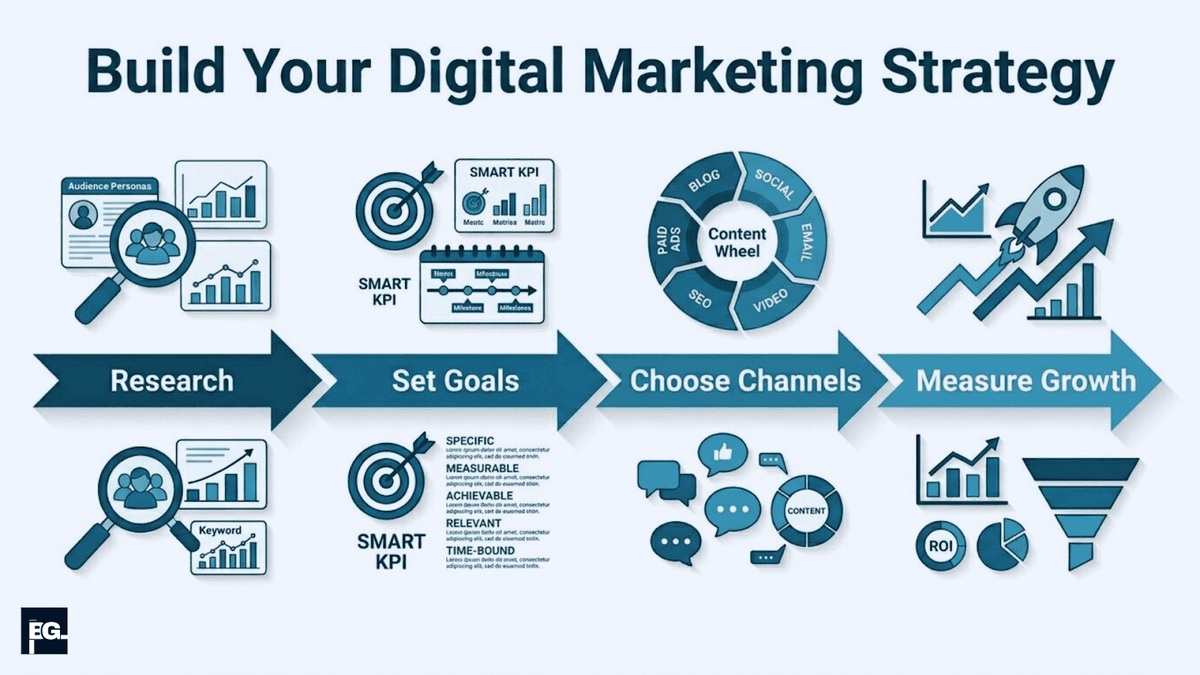
What a digital marketing strategy really is
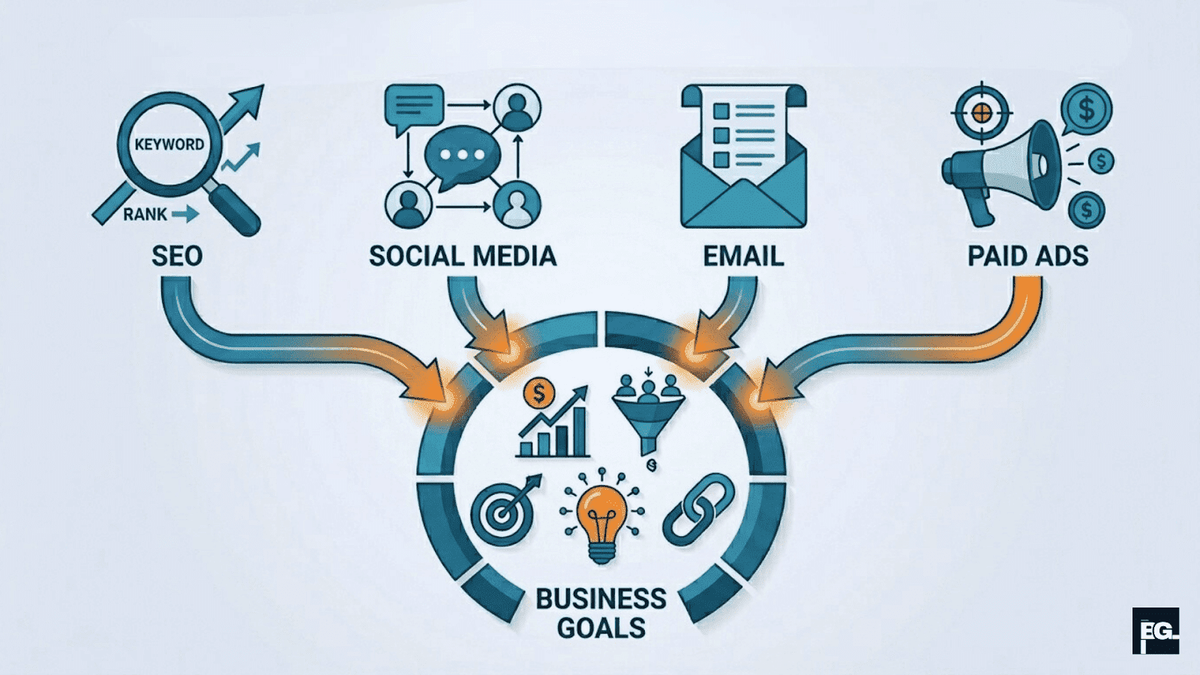
When I talk about a digital marketing strategy with clients, I always make one thing clear: it's not just "run Facebook ads and post on Instagram." A real digital marketing strategy is a structured plan that shows how you'll use online channels like search, social media, email, and your website to reach the right people and hit specific business goals.
Instead of being a checklist of tasks, it explains who your ideal customers are, what you offer them, which channels you'll use, what messages you'll deliver, and how you'll measure success.
The key is alignment: every campaign, ad, blog, or email should connect back to your business objectives, whether that's more ecommerce revenue, more demo bookings, or more qualified leads.
Why you need a clear strategy before tactics
One pattern I see a lot: brands jump into tactics first and then wonder why results are inconsistent. They pour money into ads or content without a clear plan, then blame the channel when the numbers don't add up.
Studies highlighted by Content Marketing Institute show that companies with a documented marketing and content strategy perform significantly better than those without a written plan.
A clear digital marketing strategy helps you:
- Avoid wasting budget on channels that do not fit your audience.
- Set realistic expectations for traffic, leads, and revenue.
- Align teams (marketing, sales, product, leadership) around the same goals.
- Make decisions based on data instead of guesswork.
If you've ever felt like you're "busy but not growing," chances are you're missing a proper strategy.
Step 1: Understand your business and audience

Every strong digital marketing strategy starts with understanding where you are, who you serve, and what you're up against.
1.1 Audit your current situation
I usually begin with a simple but honest audit:
- Website and analytics: How much traffic do you get? From which channels? What is your current conversion rate?
- Brand and messaging: Is your value proposition clear on your homepage and key pages?
- Current channels: Which channels are you already using (SEO, ads, email, social)? What is working and what is not?
Many guides recommend using SWOT analysis, looking at strengths, weaknesses, opportunities, and threats to structure this review. This helps you see where you are strong, where you are behind, and where the market is moving.
1.2 Define your target audience and personas
Your digital marketing strategy only works if it speaks to people who actually want what you sell. That's where buyer personas come in: semi-fictional profiles based on real customer data.
When I build personas, I look at:
- Demographics: Age, location, role, income (where relevant).
- Goals and pain points: What problems are they trying to solve? What do they want to achieve?
- Behaviors: How do they research solutions? Which platforms do they use? How do they prefer to buy?
For a digital marketing strategy for ecommerce, you might define personas like "busy parents who value convenience more than price" or "gym-goers who buy new gear every month."
1.3 Research your competitors
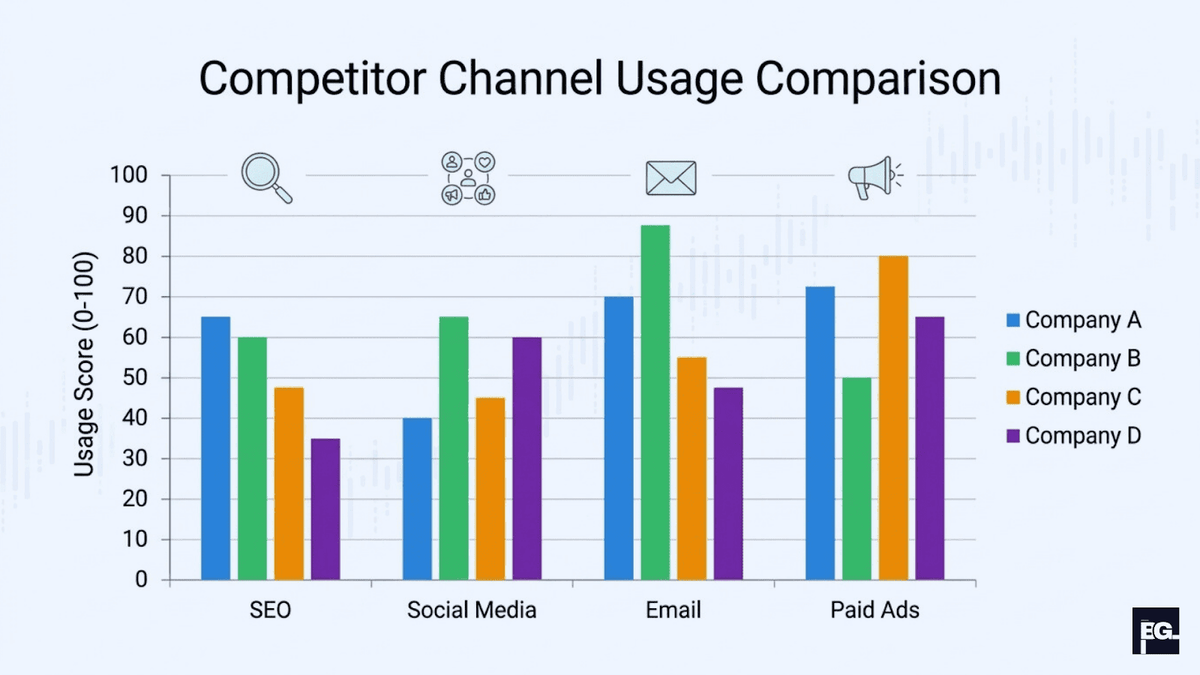
Competitive research helps you understand your market reality instead of planning in a vacuum. I typically review:
- Their main offers and messages.
- Which channels they use (SEO content, ads, social, marketplaces, email).
- What kind of content performs well (guides, videos, product pages, case studies).
- Their strengths and weak spots (for example, slow site, weak product descriptions, or no clear email funnel).
The goal isn't to copy them; it's to find your positioning and opportunities they're missing.
Step 2: Set clear, measurable goals
Once you know your starting point, you need goals that keep you honest. I like to keep things simple with SMART goals: Specific, Measurable, Achievable, Relevant, and Time-bound.
Examples for a digital marketing strategy:
- "Grow organic website traffic by 40% in 12 months for our main ecommerce category pages."
- "Generate 200 qualified leads per month from paid search campaigns with a target cost per lead of 20% of average order value."
- "Increase email-driven revenue to 25% of total online sales over the next 9 months."
Clear goals make it easier to choose the right channels and track ROI later.
Step 3: Build your digital marketing strategy framework
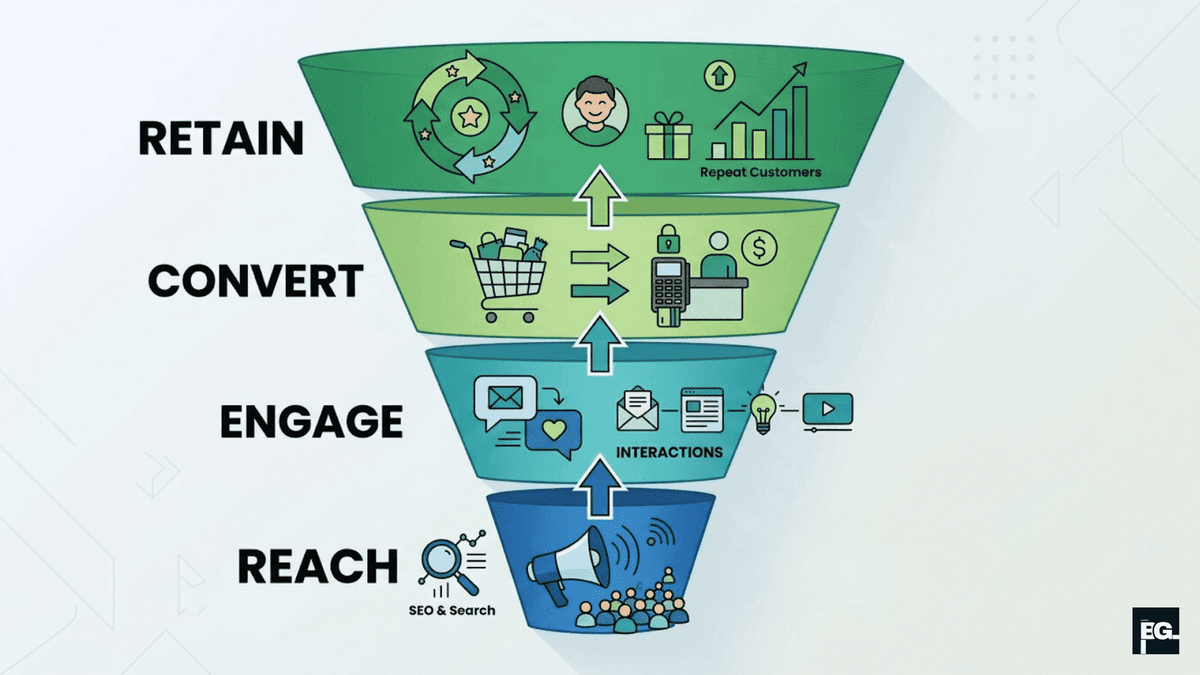
This is where we translate your goals into a journey-based view instead of random campaigns. I usually keep it simple with four stages:
Reach – People discover you (search, social, ads, referrals).
Engage – They interact with your content or website.
Convert – They take a key action (lead, sale, booking).
Retain & grow – You turn one-time buyers into repeat customers.
Your digital marketing strategy should explain what happens at each stage and which channels are responsible for moving people forward.
Step 4: Choose the right channels for your strategy
There is no single "best" channel. The right mix depends on your goals, budget, and audience behavior. Research on digital marketing shows that businesses often spread budgets across search, social, email, content, and paid media, with digital taking over most of the total marketing budget.
Here's a simple view of how channels can fit into your strategy:
| Stage in journey | Main channels | Typical role in your digital marketing strategy |
|---|---|---|
| Reach | SEO, content, paid search, social ads | Make the right people aware of your brand and offers. |
| Engage | Blogs, videos, guides, social content, email signup | Educate, build trust, and get visitors to stay or subscribe. |
| Convert | Product pages, landing pages, email flows, remarketing ads | Turn interest into leads or sales with clear offers and UX. |
| Retain & grow | Email marketing, loyalty programs, remarketing, communities | Drive repeat purchases and referrals, increase lifetime value. |
AI-powered tools are also becoming a core part of digital marketing strategy planning for personalization, automation, and content. If you want a deeper dive, check out BrainGig's guide on the impact of AI in digital marketing for more context on where it fits in your roadmap.
Step 5: Create your core message and offers
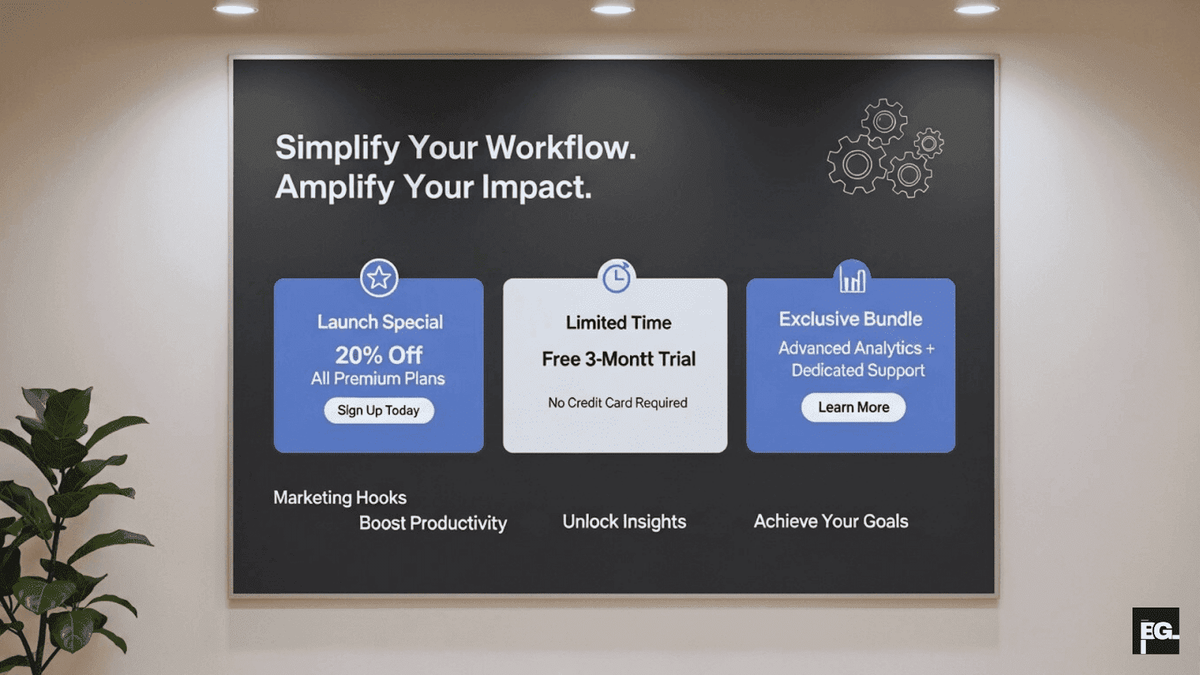
A digital marketing strategy without clear messaging is just busywork. Your message should talk about customer problems and outcomes, not just features.
I recommend defining three things:
- Value proposition: One or two short lines that explain who you help, what you offer, and why it is better.
- Key messages by persona or segment: For example, one message for price-sensitive buyers and another for premium buyers who care more about quality or support.
- Offers and hooks: Free trials, bundles, discounts, free shipping, or educational content that moves people to act.
For example, an ecommerce brand selling eco-friendly home products might use: "Make your home greener without changing your routine" as a core message, then run campaigns around bundles that save time and reduce waste.
Step 6: Turn the strategy into a practical digital marketing plan
Now you know your audience, goals, channels, and messages. The next step is to turn this into a clear plan with actions, timelines, and responsibilities.
A practical digital marketing plan usually includes:
- Channel plans: What you will do in SEO, content, paid media, social, email, and so on.
- Content calendar: Topics, formats, and publish dates for blogs, videos, emails, and campaigns.
- Budget split: How much you will invest in each channel per month or quarter.
- Tools and tech stack: Analytics, ad platforms, email tools, CRM, and testing tools needed to support the plan.
Example of a simple digital marketing plan (for an ecommerce store)
Imagine an online store selling niche fitness gear. A basic plan for the next 3 months could look like this:
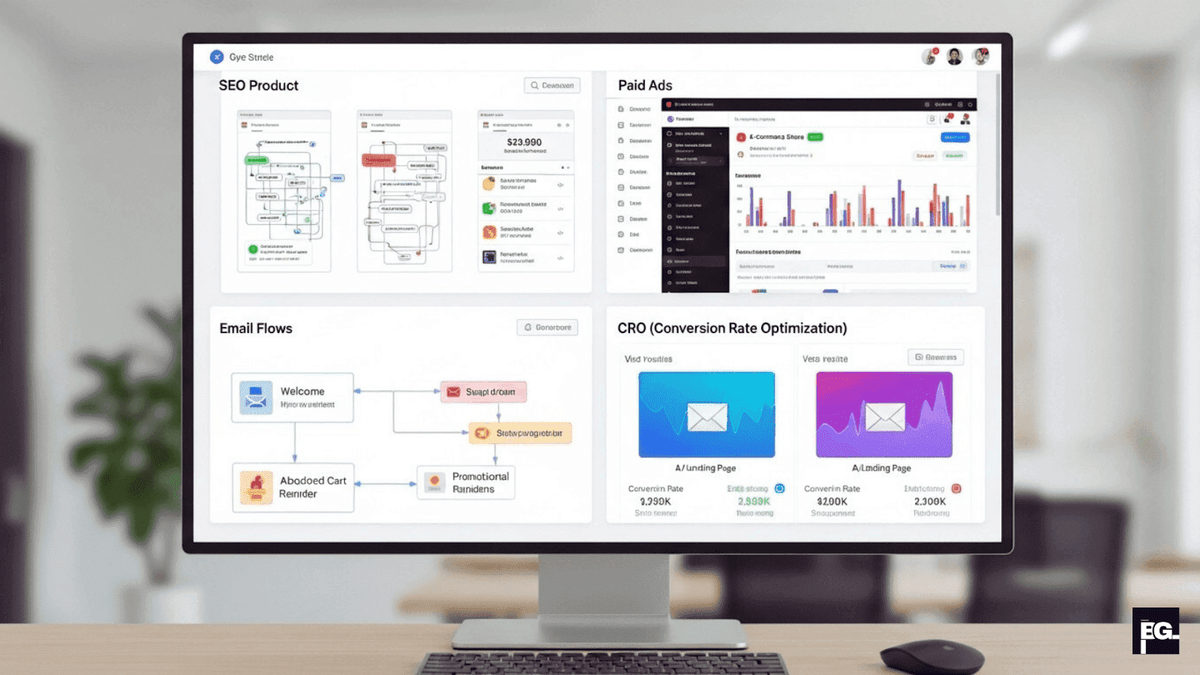
- SEO: Optimize top 10 product and category pages for high-intent keywords; publish 2 how-to guides per month (e.g., "How to choose the right resistance band").
- Paid search: Run search campaigns on "buy resistance bands online" and similar terms with clear targets.
- Social ads: Test short product demo videos on Meta and TikTok, retarget site visitors with dynamic product ads.
- Email: Set up a welcome series, cart recovery flow, and monthly product tips.
- Conversion Rate Optimization: A/B test product page layouts, add trust badges and reviews, improve checkout clarity.
This example of a digital marketing plan shows how strategy (who, what, where, why) becomes real actions on a timeline.
Step 7: Build a measurement and ROI framework
A good digital marketing strategy includes how you will measure success. ROI (return on investment) is central to this and goes beyond basic traffic numbers.
Key steps:
- Define primary KPIs for each goal, such as leads, revenue, cost per acquisition, or customer lifetime value.
- Set up tracking, analytics, conversion tracking for ads.
- Connect costs (media spend, tools, time) to results to estimate ROI using simple formulas or dashboards.
Guides on digital marketing ROI stress that this is a discipline, not just a single number. You need consistent tracking, clear assumptions, and regular reviews to learn what is working and what is not.
Step 8: Adjust for ecommerce specifics
If you are building a digital marketing strategy for ecommerce, a few extra points matter:
- Product data quality: Clean titles, descriptions, images, and structured data (schema) help with SEO and ad performance.
- On-site search and navigation: Make it easy for visitors to find products by filters, categories, and search.
- Trust signals: Reviews, ratings, payment badges, and clear return policies reduce friction.
Your digital marketing strategy for ecommerce should show how traffic, product experience, and retention work together as one system.
Step 9: Document your strategy
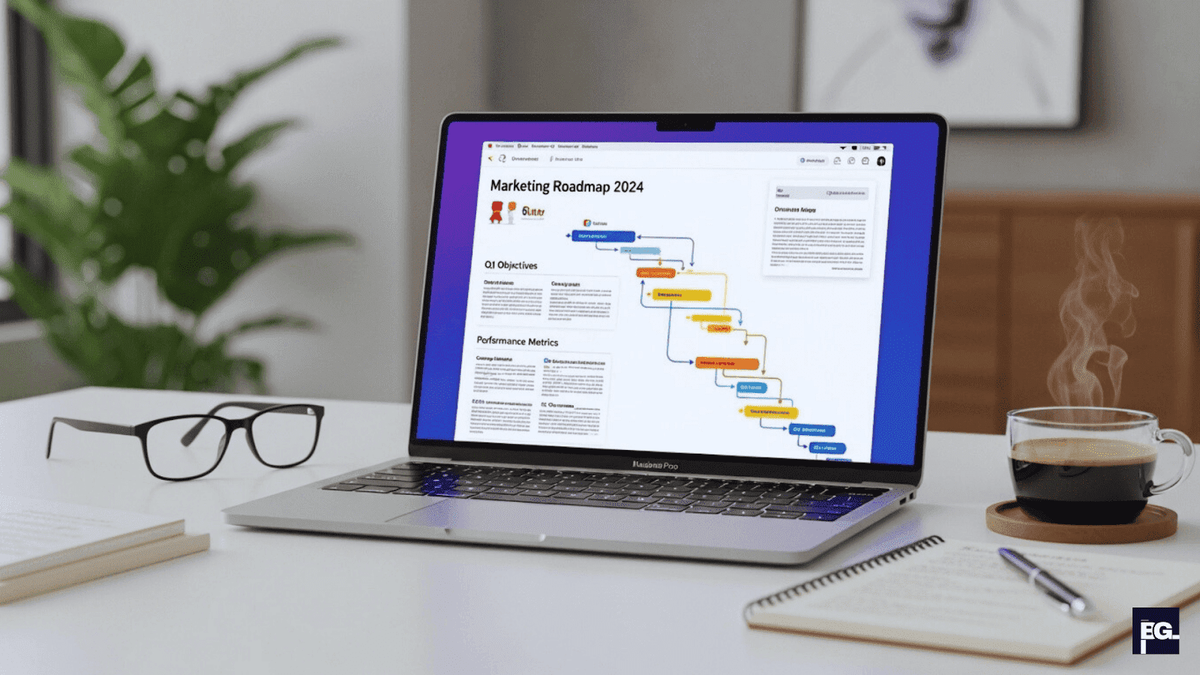
Many sources point out that a large share of businesses still do not have a written digital marketing strategy, even though they are active online. Yet documented strategies are strongly linked to better and more consistent performance.
To document your strategy, create a simple, shareable file that covers:
- Business goals and marketing goals.
- Target audience and key personas.
- Chosen channels and their roles.
- Key messages and offers.
- Measurement and reporting plan.
This does not need to be a long report. A clear 2-4 page document and a one-page summary often work the best.
Step 10: Treat your strategy as a living document
Your digital marketing strategy is not set-and-forget. Markets shift, platforms change, and customer behavior evolves quickly.
I recommend:
- Run monthly or quarterly reviews of key metrics and channel performance.
- Update your plan when you enter new markets, launch new products, or see clear shifts in customer behavior.
Final thoughts

Building a comprehensive digital marketing strategy from scratch takes effort, but it pays off with clearer focus, stronger ROI, and more predictable growth across SEO, ads, email, and social. As a digital marketing strategist here at BrainGig, I've seen the difference between brands that "try a bit of everything" and brands that follow a documented plan they improve every quarter. The second group almost always wins over time.
At BrainGig, we help businesses design and execute custom digital marketing strategies, from ecommerce growth plans to full-fledged SEO and paid campaigns, so they can stop guessing and start scaling with confidence. If you're ready to turn your scattered tactics into a cohesive digital marketing strategy that actually drives results, you can reach out to the BrainGig team and we'll help you build a plan customized to your business goals.