


Quick snapshot: the 5 mistakes and how to fix them
| Mistake | What it looks like in real life | Simple fix to start with |
|---|---|---|
| No real strategy | Random campaigns, no clear goals or roadmap | Document 1–2 primary goals, audience, and 90‑day plan |
| Weak audience & intent | Broad targeting, generic messaging | Build 2–3 data‑based personas and map search intent |
| Paid & AI without measurement | Ad spend, dashboards, but no clear ROI | Fix tracking, define “success” metrics, then scale |
| Volume over value in content | Many posts, low engagement and rankings | Publish fewer, deeper, well‑researched pieces |
| Broken website & UX | Traffic but low conversion, especially on mobile | Fix UX basics first, then amplify with campaigns |
Mistake 1: Treating digital marketing as tactics, not a strategy
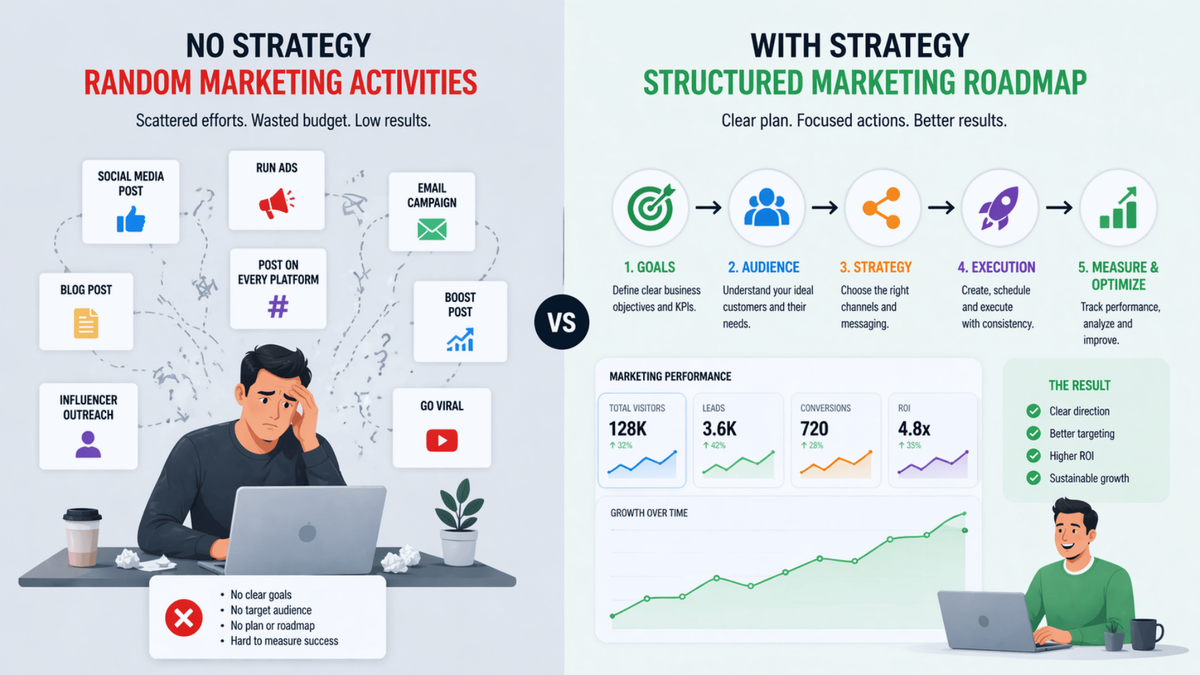
When I audit accounts, the biggest problem I see is lots of activity but no clear written strategy.
Teams run SEO, social, email, and ads, but there is no shared document that says, “Here is our audience, here are our goals, and here is how each channel contributes.” C MI's latest B2B research confirms this: only 29% of marketers who have a documented content strategy rate it as very effective. Among those who are struggling, 42% cite a lack of clear goals, and 39% say their strategy isn't tied to the customer journey.
In practice, this looks like:
- Campaigns launched because “we should be doing this” rather than because they fix a specific business goal.
- Teams judge success by surface metrics (clicks, likes) instead of revenue or retention.
- No clear way to decide what to pause, scale, or test next.
How to fix it
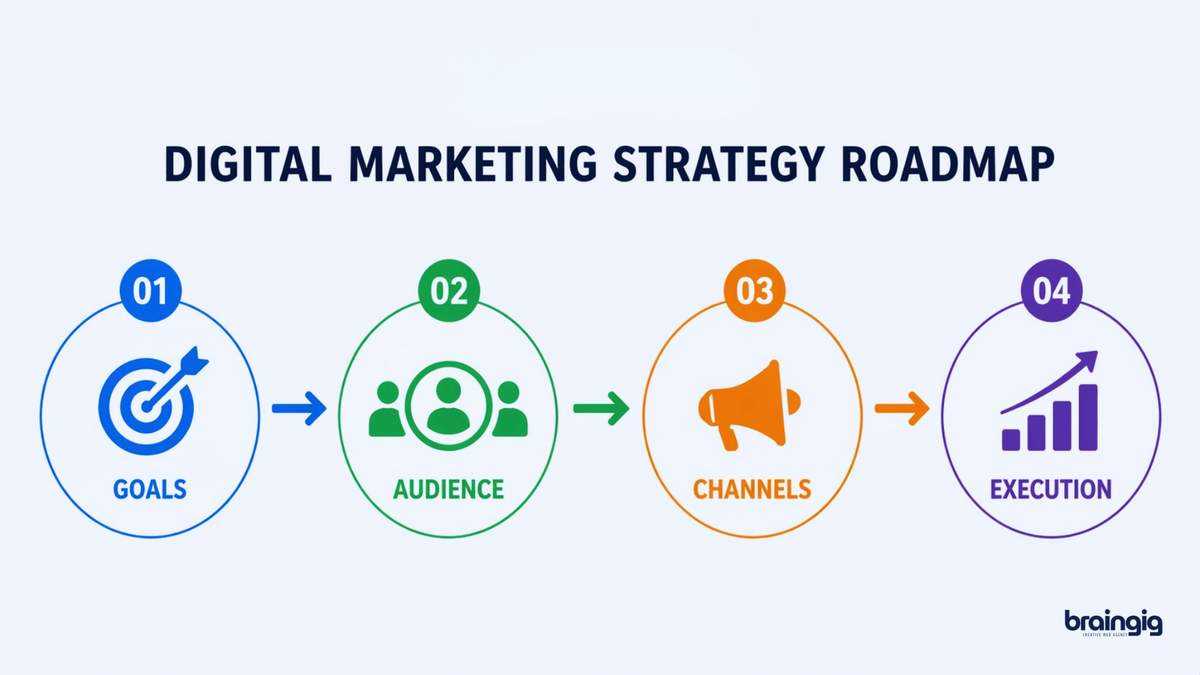
For 2026, you do not need a huge strategy deck. A simple 1–2 page plan that everyone can follow is enough:
- Define 1–2 core business goals: For example, “Generate 40 qualified demo requests per month from mid‑market B2B SaaS companies,” or “Increase online sales by 20% in 6 months.”
- Write down your primary audience: Use real data where you can. For example: past customers, CRM, interviews. Top‑performing marketers repeatedly say “knowing our audience” is the main reason their content works.
- Map channels to stages: Decide which channels you’ll use for awareness (SEO blogs, social), consideration (case studies, webinars), and conversion (landing pages, remarketing, email sequences).
Once this is written, every proposed campaign has to answer one simple question: Which goal and which stage is this supporting? If it can’t answer that clearly, it’s probably noise.
Mistake 2: Targeting everyone and ignoring real audience intent
The second big digital marketing mistake I see is targeting “anyone who might buy” instead of the specific people most likely to become profitable customers.
According to CMI, 82% of the most successful B2B content marketers say deeply understanding their audience is the single biggest reason their work performs. It beats having a bigger budget, more tools, or a larger team.
In real campaigns, this mistake shows up as:
- Broad, generic messaging like “we help businesses grow” instead of speaking to a specific role, industry, or problem.
- SEO content that targets high‑volume phrases, but ignores search intent, so you rank (if you’re lucky) but attract the wrong visitors.
- Ad audiences defined by “all ages, all locations, all interests” just to get cheap impressions.
How to fix it
When I work with clients at BrainGig, I usually start with just 2–3 real personas and search intent, not twenty:
- Build 2–3 personas from data, not guesswork: Use Customer Relationship Management (CRM), analytics, sales calls, and support tickets. Document job role, industry, goals, fears, buying triggers, and what “success” looks like for them.
- Map search intent, not just keywords: For each primary keyword (“digital marketing mistakes,” “digital marketing mistakes to avoid”), ask:– Are they trying to learn (informational)?– Compare options (commercial)?– Or take action (transactional)?Then structure your content accordingly.
- Speak directly to that reader: Instead of “Businesses often…”, write like you’re talking to one person: “If you’re a founder running your own campaigns at midnight after client work, this mistake probably sounds familiar…”
When you mention real situations, numbers, and tools your audience already knows, your content feels more relevant and useful.
Mistake 3: Spending on paid ads and AI without solid measurement
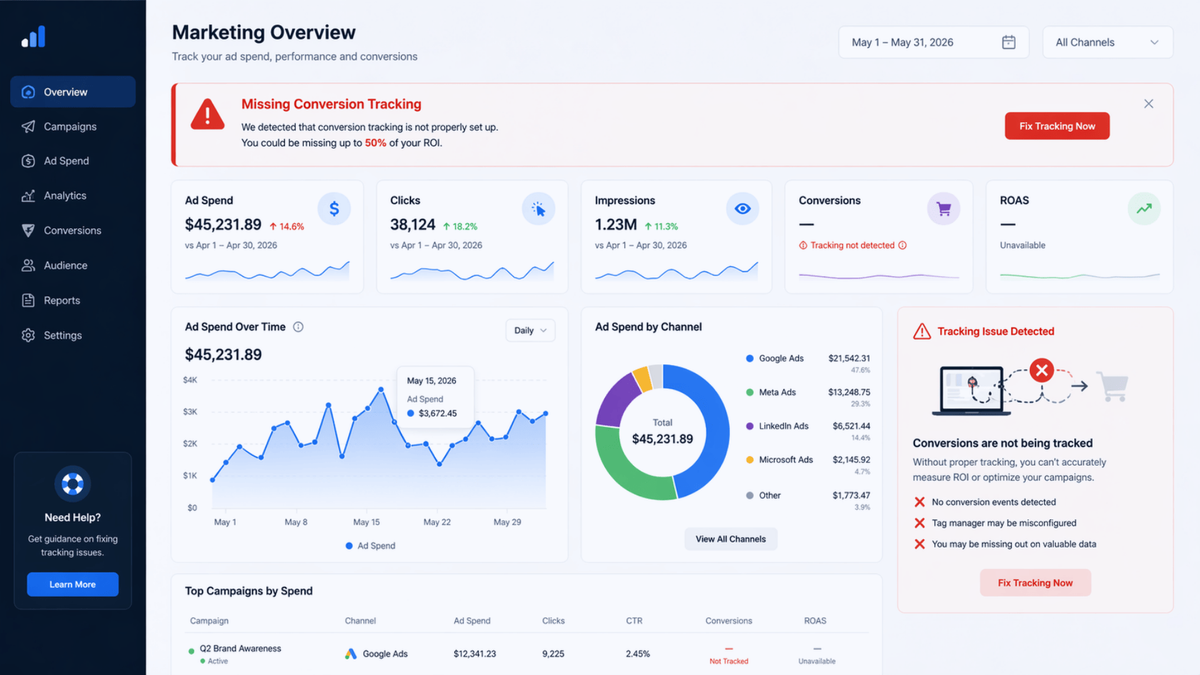
This is the most expensive mistake: spending on Google Ads, Meta, LinkedIn, or AI campaigns without knowing what came back from it.
Recent research from Google and WARC shows that marketers who focus only on short‑term campaign metrics can miss as much as half of their true marketing returns, because they ignore the longer‑term impact of brand building and repeated exposure. Other ROI studies show that when you model full‑funnel impact, long‑term profit from marketing can be more than double the “visible” short‑term ROI.
On the Pay Per Click (PPC) side, a 2025 B2B performance review found huge differences between platforms: in one aggregated analysis, Microsoft Bing Ads delivered around 253% ROI, while LinkedIn drove the highest lead quality (14–18% MQL‑to‑SQL conversion), and Google Ads remained the core high-intent engine for capturing bottom-funnel demand.
How to fix it
When I see this pattern, the fix usually has three steps:
- Get your tracking basics clean before scaling: Make sure GA4 events, conversions, and key actions are set up correctly and tested. For paid, ensure conversion tracking is working for leads, sales, or booked calls, not just clicks.
- Define what success really is for each channel: For example, search campaigns might be judged on cost per qualified lead, while LinkedIn campaigns might be measured on demo‑ready opportunities or pipeline influence, not just marketing qualified link volume.
- Balance brand and performance: The Google/WARC work suggests that allocating roughly 50–60% of spend to brand building and 40–50% to performance can maximize total ROI over time. If everything you do is “bottom‑funnel,” you may win some cheap wins but leave long‑term growth on the table.
A simple rule I share with clients: never scale a channel that you can’t measure beyond clicks. Until you know how a channel contributes to pipeline and revenue, treat it as an experiment, not a growth engine.
Mistake 4: Chasing content volume instead of value
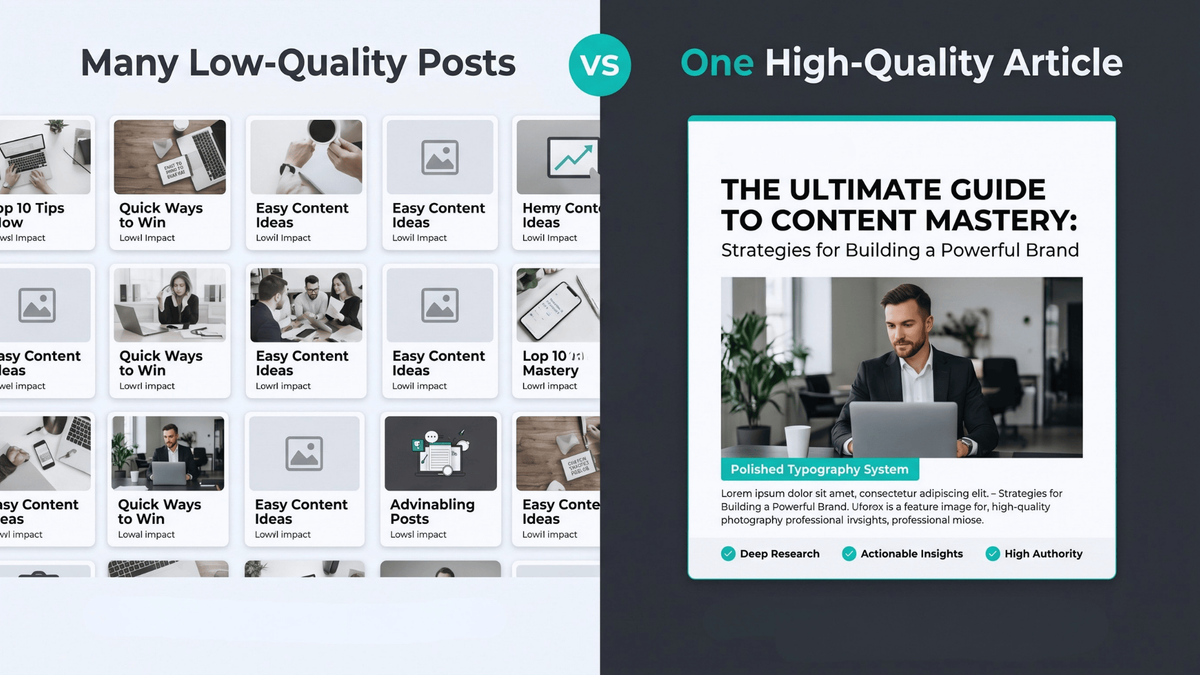
With AI everywhere, one of the biggest mistakes in 2026 is thinking more content automatically means better results.
According to HubSpot research, 83% of marketers say it is more effective to focus on content quality over quantity. More posts does not mean more traffic or more leads. In my experience managing SEO campaigns at BrainGig, a single well-researched, in-depth article consistently outranks a batch of thin, quickly-produced posts within the same timeframe.
In the wild, this looks like:
- Dozens of thin blog posts that lightly rephrase what’s already ranking, with no new data, examples, or point of view.
- AI‑generated articles that technically cover a topic, but sound generic and get little engagement.
- Social feeds full of posts that never tie back to real case studies, numbers, or offers.
How to fix it
In my experience, one really good article is usually more useful than four weak ones. To move in that direction:
- Choose fewer, higher‑intent topics:Focus on terms where you can genuinely add something better than what’s ranking, deeper how‑to, clearer examples, updated 2026 data.
- Back every important point with something concrete:Use stats from credible sources, simple charts, or short case studies. For example, content research shows that top performers attribute success to producing high‑quality content and effectively measuring performance, not just high frequency.
- Use AI as a helper, not the writer:Let AI assist with outlines and drafts, but make sure the final piece includes your own experience, local examples, screenshots, and internal data where possible. Generative engines are already flooded with generic text; they’re hungry for real, specific information.
The simple idea here is this: engines usually will not pick ten nearly identical articles from the same site. They will pick the one that feels most complete, useful, and trustworthy for the searcher. Make that your focus piece.
Mistake 5: Ignoring website UX, mobile, and the full experience
One big mistake is treating your website like it is only a landing page, while giving all the attention to ads and posts.
Here's the reality: mobile now accounts for over 56% of all digital ad spend globally. A growing share of content discovery also happens via search and social media on phones. This means most visitors encounter your brand for the first time on a small screen , and if your site performs poorly on mobile, no amount of ad spend will fix that.
The data backs this up: if your page takes longer than 3 seconds to load, 53% of mobile visitors leave before seeing anything. For B2B sites specifically, a page that loads in 1 second has a 3x higher conversion rate than one that takes 5 seconds (Portent). Here's a practical guide on how to improve website loading speed.
How to fix it
When I review a client’s digital presence, I usually start with a simple UX and performance audit before we touch any campaigns:
- Test key pages on mobile first: Open your home page, main service page, and top blog on your phone:– Is the main message readable without zooming?– Are CTAs visible and clear?– Does it load fast on a normal mobile connection?
- Fix obvious friction: Simplify navigation, cut unnecessary steps in forms, and make buttons large enough to tap comfortably. Even in B2B, mobile optimization is now directly tied to marketing ROI and campaign performance.
- Align the journey across channels: Make sure the promise in your ad or post matches the page someone lands on. If an ad mentions a specific offer or outcome, the landing page should repeat it clearly above the fold, not bury it in small text.
This is also where BrainGig‑style UX and development work pays off: better structure, faster pages, and clearer messaging don’t just “look nicer”, they make every SEO, ad, or email campaign more profitable.
Final thoughts: avoiding these digital marketing mistakes in 2026
The hard truth is that most brands in 2026 are not losing because their tools are outdated; they’re losing because the basics are still broken.
The good news is that each of these five common digital marketing mistakes is fixable with deliberate, human decisions: write down a real strategy, sharpen your audience and intent, measure properly, prioritize quality over volume, and treat your website as a core product, not an afterthought.
Start with one fix from this list and commit to it for 30 days. In my experience at BrainGig, clients who clean up tracking first unlock clarity across every other decision. Pick the one mistake that sounds most like your current situation and fix that first.
If you want a second pair of eyes on your current setup, feel free to reach out to the team at BrainGig , no pitch, just a conversation.
Summary: Topics Learned
Q: What is the first digital marketing mistake to fix?
A: No documented strategy. Define your 1-2 primary business goals, your audience, and your 90-day plan before launching any campaign.
Q: Why does targeting everyone hurt results?
A: Broad targeting attracts the wrong visitors and wastes the budget. 82% of top-performing B2B marketers say audience understanding drives their success more than any tool or tactic.
Q: What is the biggest measurement mistake in paid ads?
A: Tracking clicks and impressions but not conversions or revenue. Google and WARC research shows marketers missing proper measurement can lose up to 50% of true marketing ROI.
Q: Does publishing more content improve SEO in 2026?
A: No. 83% of marketers confirm that quality beats quantity. One well-researched, in-depth article outperforms a dozen thin posts in both rankings and conversions.
Q: How much does slow website speed actually hurt your results?
A: Significantly. 53% of mobile visitors abandon a site that takes more than 3 seconds to load. For B2B sites, a 1-second load time delivers 3x better conversion rates than a 5-second load time.